Showing posts with label cloth diapers. Show all posts

Thursday, August 18

yesterday...

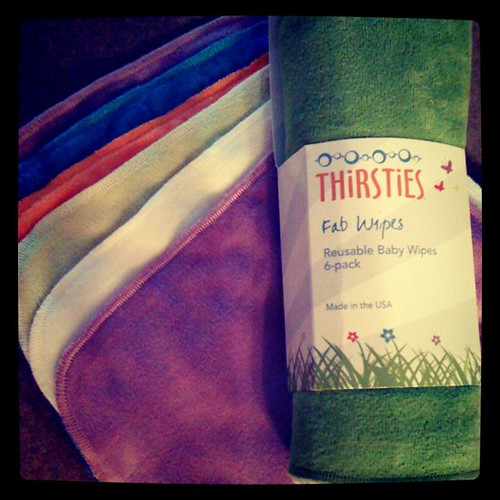
My new cloth baby wipes came, hooray! 
Don't ask me why I haven't been using them all along.
It makes no sense to me either.

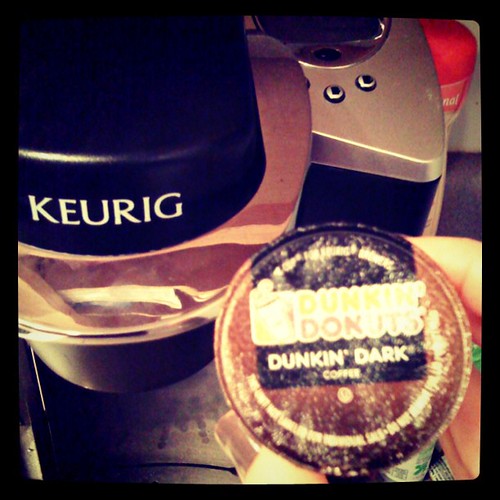
New Dunkin Donuts Dark Roast coffee is smooth and delicious!

A sneek peek at Iris' birthday decorations in the works!


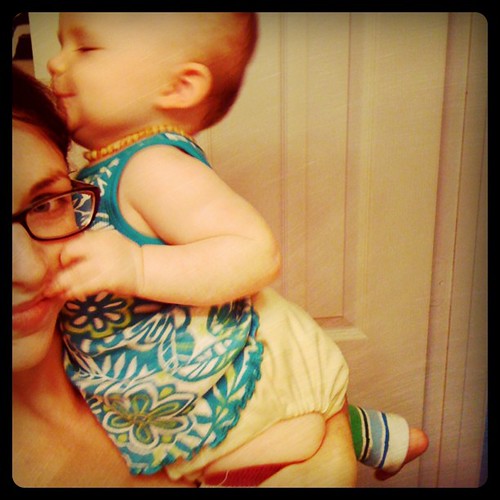
Cute baby hugging my face.

We watched a bit of Sesame Street - Iris loves it when they count!
I really needed to start working on some of her birthday decorations and Sesame Street will distract her from me for short periods of time. I am hand-making all of the decor and really enjoying it!

Lately, she's been nursing around every 30 minutes due to teething
 or a growth spurt, I'm not sure.
She apparently enjoys being able to see Big Bird while nursing.


Today, we were picked up by a friend and joined another girlfriend at her new house. She is finally moving in to a new house after a tornado destroyed her rental back in April. So happy she's finally at the end of this stressful time, as her hubby is also deployed! I'll hopefully be watching her cute, year old son next week as she unpacks.

On the way back home, we stopped at Krispy Kreme for my very first time! 
I ate three donuts in one sitting.
And I am in love. 
This weekend we are taking a trip to Ikea! Marius also has some sort of super-secret surprise planned for this long weekend... I can't want to find out what it is!

Tuesday, May 17

how do you wash cloth diapers?

This post has been a long time coming and has been sitting in my queue for weeks. Oops! If you're interested in cloth diapering, read on about how to wash!

This is the most popular question I've been asked about cloth diapering since starting to consider it. Yes, at first even I cringed at the thought of poop in the washing machine. It's one of the aspects which first turned me off the idea of cloth when I was pregnant. Only after discovering the many downsides to disposable diapers did I do some research into how the laundering is accomplished. It's really not as bad as it sounds but there are some complexities involved.

First, you need what is called a wet bag or a wet/dry pail. A wet bag is a waterproof bag used to store soiled diapers. A wet pail is a pail filled with water in which dirty cloth diapers are placed to soak. It's then drained before loading the diapers into the washing machine. This method has been largely replaced due to smell, mess and potential safety issues. The dry pail just involves placing the diapers into a dry, waterproof lined pail. Depending on the size of your bag/pail and how many diapers you have, you will be doing diaper laundry every 1-3 days. We have a Rumparooz wet bag for the house and a medium sized Planetwise wet/dry bag for outings.

Assuming baby is exclusively breastfed, the first six months of washing is a breeze because breastmilk poop is completely water-soluble. No rinsing is necessary; everything goes in the wash and comes out perfectly clean. If baby is formula fed or once baby is eating solids, the majority of the poop must be knocked/wiped off or sprayed with a diaper sprayer into the toilet. There are also flushable liners that lay inside the diapers to catch the poop, making the job much faster. Whatever liquid is absorbed by the diapers and even if there's a little bit of poop left, there is no reason why it can't go into the wash! We've been putting breastmilk poop into our washer for over a month now and from what we're aware of, our clothes don't smell like poop and are as clean as they ever were!

There are endlessly different washing routines - everyone does something a little differently. What I do is start with at least one cold rinse to wash all remaining solids off the diapers. Then add detergent and wash on hot/cold heavy cycle, do another cold rinse or two. Then I air dry my covers (which extends the life of the elastic and waterproof fabric) and put the inserts in the dryer.

Detergent is another thing you need to consider. We are currently in the process of switching detergents to find something that works for us. You cannot use just any detergent - the softeners, enzymes and other additives in regular detergent will build up in the fabrics. This will cause the stay dry fabrics (found in pocket diapers) to repel liquid when worn. You can imagine how well that turns out - ie. they leak like crazy. If you do experience buildup (signs of this are excessive odor from the diapers or repelling) you will need to 'strip' your diapers of this residue. To remedy that, you rinse/wash/rinse without any detergent multiple times until the residue is agitated out of the fabrics.

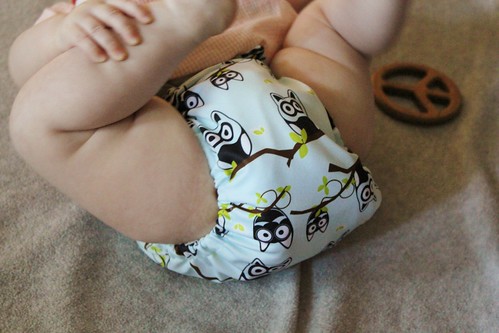
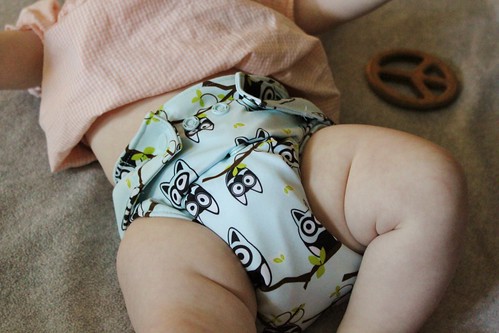
I could ramble on about this for quite a while! If you're interested in cloth diapering your baby, feel free to send me an email and I'll supply you with more info about it! Now for your patience, some cute butt fluff!

IMG_1214 (1024x683)

IMG_1206 (1024x683)

IMG_1207 (1024x683) (1024x683)

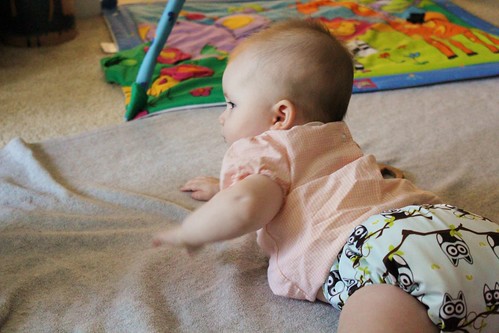
Diaper: GroVia

Saturday, May 7

cloth diapers - fitteds, contours, prefolds and flats

The more old fashioned style is what people think of first when you mention cloth diapering. They are exclusively made of cloth, fastened to baby and paired with a separately purchased cover to make it waterproof. The four main groups are fitteds, contours, prefolds and flats.

Fitted diapers are fastened with hook and loop (velcro) closures or snaps and has elasticized gussets (the part which goes around the thighs) to help keep messes in. They have layers of fabric inside to absorb wetness, do not need to be folded in any way and use a diaper cover.
Example of Kissaluvs fitted diaper.

Contour or shaped diapers are a fusion between contours and prefolds/flats. They are designed in an hourglass shape ie. are 'contoured' trimly around baby's curves. Some have an absorbent center flap of fabric called a doubler and usually don't need to be fastened with anything. They are a cheaper alternative to fitteds.

Example of a Kissaluvs contour diaper.

Prefolds are the most basic of diapers, but they can also be complicated for beginners. A prefold is a flat rectangular piece of cloth composed of different layers of fabric. There are many different types and variations of this diaper and if you'd like to read about them, this is a good place to do so. There are a few ways to fold this type of diaper and they can be fastened with pins, a 'snappi' or laid into a well fitting cover.

Example of OsoCozy unbleached prefold diapers.
Flat diapers are the forerunner of prefolds.The main difference is that prefolds have more layers of fabric in the center, while flats do not. They are the cheapest type of diaper you can buy and though they are considered less absorbent than prefolds, it can be folded specifically to remedy that.

Example of Bumkins flat diapers.

Though they may seem a bit old-school, all of these types of diapers are just as effective as the more modern ones and many people use and love them. I have a selection of prefolds to use in rotation with our pockets and AI2s. There's a bit of a learning curve at first (though not so much with the contours and fitteds, they are pretty cut and dry), but it's worth it for their versatility and inexpensive price tag!

cloth diapers - pockets.

These are similar to AI2s (all in 2), but instead of the fabric insert being laid into the waterproof shell, it is stuffed into it! A thin layer of fabric sewn against the shell is designed to keep baby's skin dry and creates a pocket to stuff with the fabric insert. This style allows you to stuff with as many inserts as you want, so you decide how absorbent you want the diaper to be. When it's soiled, remove the insert and drop both insert and shell into your wet bag. 

Example of a FuzziBunz pocket diaper. Click to view larger.
Pros of pockets:
cheaper than AIOs
very versatile
wicks away moisture from baby's bottom
usually trim fit

Cons of pockets:
more expensive than hybrids or prefolds/covers
stuffing adds time to laundering routine
you may have to touch the soiled insert
can have buildup problems with liner part of pocket
dryness not great for potty learning age

We have 5 BumGenius! OS and 1 FuzziBunz OS in our stash right now. I stuff them with two very absorbent inserts to use as nighttime diapers and that's been working great so far. Iris is a heavy wetter at night and was even leaking out of disposables when we used them. The pocket stuffing is an extra 5 minutes after laundering, but it's worth it for the versatility and dryness factors. Can't wait to add more to our diaper basket!

cloth diapers - hybrids.

Hybrids follow the same idea as AI2s (all in 2). Hybrid means "a thing made by combining two different elements". Thus, these diapers are designed to work with cloth inserts that lay or snap in, but also have environmentally friendly disposable inserts available. The disposable inserts are helpful when you're on the go and don't want to carry around any bulk. Depending on the brand, they can be composted or flushed and contain no dangerous chemicals.


The GroVia AI2 is also a hybrid system. Click to view larger.

Pros of hybrids:
convenience of disposable inserts
great for travel
no need for carrying wet bag with disposables

Cons of hybrids:
disposable inserts can be expensive
flushable inserts are not 100% flushable
some brand's inserts can leave sticky residue

As I've mentioned, we have a nice stash of GroVias. I've never needed to buy disposable inserts, but we may end up getting some in June for the long car trip up to our home state. It'll be nice to have this option while we're on a mini-roadtrip!

Thursday, May 5

cloth diapers - AI2s.

AI2s (all in 2's) are a two part style of diaper. Instead of the absorbent fabric being sewn into a waterproof shell, you can remove the inner fabric so that it's a separate piece from the shell. When the diaper is soiled, remove the fabric insert and drop in your wetbag. The shell is then reusable with another clean insert, assuming it hasn't gotten dirty with the last use.
Example of a GroVia diaper - shell and removable/replaceable insert. Click to view larger.
Pros of AI2s:
very economical system of diapering
good for traveling and outings
no stuffing inserts - they lay or snap in
shell can be used with prefolds or other inserts

Cons of AI2s:
inserts take a long time to dry
can be bulky on small babies
shell doesn't always stay clean between uses

GroVia had a buy 3 shells get 1 free sale in April, so now I have 5 of the covers and 9 inserts so far. They fit Iris well, come in cute patterns and we've never had a leak. I like both the snaps and this particular velcro. I can easily pack extra shell and a couple of inserts in my purse and we're all set for an afternoon out. There are other brands available too. Definitely one of my favorites!

cloth diapers - AIO.

Their name says it all - AIO (all in one diapers). They work the same way as disposables do, but are reusable! Simply put on baby and bam - you're done! Everything you need is all included. They are composed of an outer waterproof shell with an inner lining of layered fabric sewn in. When the diaper is soiled, simply take it off baby and drop the whole thing in your wet bag. Simple as that. They can be purchased as sized or OS (one size). They also come in some very cute prints and deliciously plush and soft fabrics, if you can afford it!
Example of a BumGenius! AIO diaper. Click to view larger.
Pros of AIOs: 
most like a disposable
simple and easy to use
good for babysitters or daycare
no effort required

Cons of AIOs: 
one of the most expensive styles
can be harder to get clean
less versatility
 may not have enough absorbency for heavy wetters
longer drying time

I don't own any AIO diapers because they are not in our budget, but I did try one during my cloth diaper trial with Jillian's Drawers. It was extremely convenient but I personally prefer pocket diapers and AI2s! 

the basics about cloth diapers

If you've explored the internet for information on cloth diapers, chances are you were totally overwhelmed with information. AIOs, AI2s, pockets, hybrids, prefolds, soakers... poop in the washing machine?! It's gibberish at first glance and it can be a real turn off - I know it was for me! In this series of posts I will attempt to break down the types of cloth diapers available today. They've come a long, long way since pins and rubber pants! Before I go into the different styles and systems available, you should know that there are two main groups of modern cloth diapers - sized and one size.

Sized or perfect fit diapers are designed to fit babies in certain weight groups as they grow. As your baby grows out of one size, you must then purchase the next size up. It is more expensive to cloth diaper this way for obvious  reasons, but many people make it work for them by reselling the used diapers to fund part of the next size purchase. Sized diapers may fit your child's waist and legs much more specifically and they tend to be trimmer under clothing.
Example of FuzziBunz perfect size diaper specifications. Click to view larger.

OS (one size) diapers are designed with rise snaps and/or adjustable leg elastics to adjust to fit babies from birth to potty training. Rise snaps adjust the size of the diaper measured between the legs from the lower back to right underneath the bellybutton. Adjustable leg elastics do the same but are not visible on the outside of the diaper. This method of diapering is less expensive because once you purchase your stash of diapers, they will last for as long as your child needs them! They are also great if you have more than one child, but the down side is they don't always fit perfectly.
Example of a Rumparooz one size diaper. Click to view larger. 

Some people choose to purchase newborn diapers for the first few weeks. They are much smaller than regular small sized diapers or the smallest setting on an OS diaper. They fit small babies and preemies very well and are less bulky, but can also be an expensive as you will only need them for a short time. Then again, you can always resell them - there is a huge cloth diapering community and a lot of interest in gently used diapers! I purchased some myself to save money and they are wonderful!
Example of Rumparooz newborn diaper. Click to view larger.

Every brand, style and system of modern cloth diapers have one of two different types of waist closures - snaps or hook and loop (velcro). Snaps are strong, don't wear out and don't allow for toddlers to pull their diapers off. Hook and loop closure is a less cluttered looking diaper (ie no unused snaps showing) and also make the waist endlessly adjustable instead of being reliant on predetermined snap settings that may not be tight or loose enough. The downside is your toddler can figure out how to take the diaper off and they can also wear out in the laundry after a few years of use. You can see examples of each in the pictures above. The old fashioned pins are still available, as well as a new invention called a 'snappi', but they are not applicable for the kinds of diapers mentioned here.

Next up, I'll talk about some of the different styles of cloth diapers along with their pros and cons. I'm sure you're wondering, "how do you wash them?" I will get to that soon, until then I'll enjoy keeping the suspense going! 

Friday, April 29

what I didn't know about disposable diapers

Unless you're into elimination communication, which is intriguing but a little too crunchy even for me, diapers are a necessity for babies and toddlers. I had seen many mentions online about cloth diapering but as most of us do, I discarded the idea almost immediately. I thought it must be a lot of work, messy and inconvenient. Well the truth is, many conveniences of our day are actually much less beneficial than we are conditioned to believe. 

When Iris was born, her tiny bottom was quickly packaged into a Pampers Newborn Swaddlers diaper. I dutifully changed her every two hours, not giving much thought to what was constantly wrapped against her brand new skin. Three months later, I started to discover what I didn't know about disposables.

IMG_0808 (2)
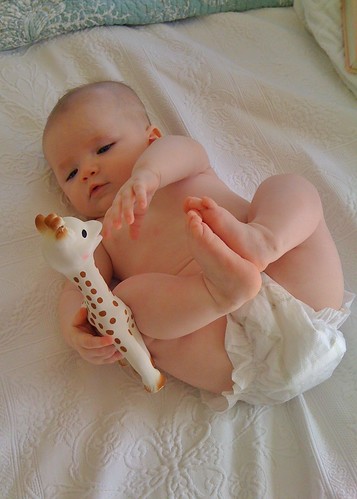
Iris in a disposable diaper.
The bleaching process during the manufacturing of disposables creates a byproduct called dioxin, which is listed by the EPA as the most toxic cancer causing chemical there is. It is banned in most countries, but not in the US. Some diapers may even contain trace amounts of the chemical. It can also cause reproductive and developmental problems, hormonal imbalances and more.

They contain Tributyl-tin (TBT) which is a toxic pollutant known to cause hormonal problems in humans and animals. 

Research published in the year 2000 shows that disposables increase the scrotal temperature of baby boys, and prolonged use can impact sperm production. In another study, rats were exposed to out of the package disposable diapers and reacted with eye and throat irritation and respiratory problems. 

Sodium polyacrylate was banned from use in tampons in 1985 due to its link to toxic shock syndrome. It is a gel like polymer which absorbs large amounts of liquid and creates an environment for toxin producing bacteria. It still exists in disposable diapers. If you've ever seen the crystal-like gel inside a disposable, that is sodium polyacrylate. No studies have been done to see the long term effects of this chemical existing against children's bottoms during the years they are in diapers.

This horrific list is my number one reason for switching to cloth diapers. Even when I switched to a "natural" brand of diapers thinking it would be better for Iris' health, I found little pieces of sodium polyacrylate gel sticking to my daughter's genitals while changing her. It truly disturbed me. 

There are also other impacts from disposable diapers ranging from your wallet to the health of our planet. However, in my mind and my life, it's most important to know that my sweet baby is no longer exposed to these toxic chemicals. It is simply one of the best parenting decisions I have made thus far.

IMG_1065 (853x1280)
Iris loves the fluff!
I would strongly encourage everyone to try cloth diapers! There are many different trial programs available online, which is how we chose the diapers that work best for us. They are better on every level; I wouldn't go back to disposables for anything! 

Coming up, posts about the types of cloth diapers available and how in the heck it all works! It's much easier than you imagine!